Our 2025Impact Report
Reflection and insights from Small Foundation and our partners on the networks powering collaboration across the continent - and our shared vision of a thriving Africa free from extreme poverty.
Learn more
Our vision of a thriving Africa free from extreme poverty can feel elusive in these tumultuous times. It is not one that any organisation working alone can possibly achieve; it requires people willing to imagine something different, take risks, and collaborate.
Those best placed to drive innovation bring expertise, skills and lived experience – which is why we work through partnership with extraordinary leaders and teams.
Some of our partners open up access to capital and markets. Some build the evidence base the sector draws on. Others strengthen relationships between organisations that have a common purpose. All contribute to thriving business ecosystems that support rural economies.
In this report, we highlight approaches to building collaborative networks across SME market systems. This work is hard to see, and so often under-resourced. Networks allow for the creation of connection and trust to build collaborations that shift systems. This report shows what that looks like, through the voices of network leaders and members.
Change happens through intentional engagement, with a long-term perspective. It is vital to fund the critical network infrastructure that can provide connective tissue across organisations, sectors, and geographies.
Thank you to every partner who gave time to sharing the insights and reflections below. I hope you find their passion, commitment and achievement as inspiring as I do.
Sincerely,
Liz Wilson, CEO
Complex problems cannot be solved by one person or one organisation. Small Foundation supports mission-aligned networks that help people and organisations find each other, align their efforts, and, where the conditions allow, build towards a common purpose that no one individual or institution could have achieved alone. Below we explore case studies and reflections of networks demonstrating strong practice and the often invisible threads of connection that makes their work possible.
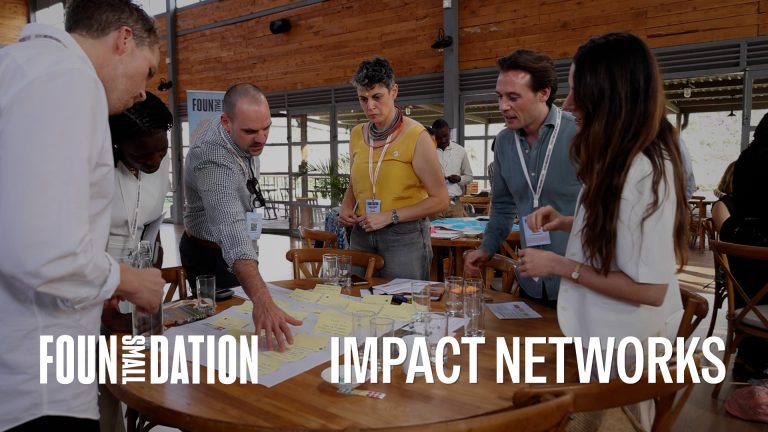
A thriving Africa is built from the ground up – by farmers, traders, and entrepreneurs closest to the challenges they face. When it is possible to work together, addressing challenges becomes more achievable. We support networks because we believe some of the persistent challenges in rural economies – access to knowledge and services, duplicated effort, markets too fragmented to attract capital – aren’t solved by any single organisation, however capable. They’re solved when people and institutions find connection and trust, coordinate their efforts and, in time, collaborate to build solutions together.
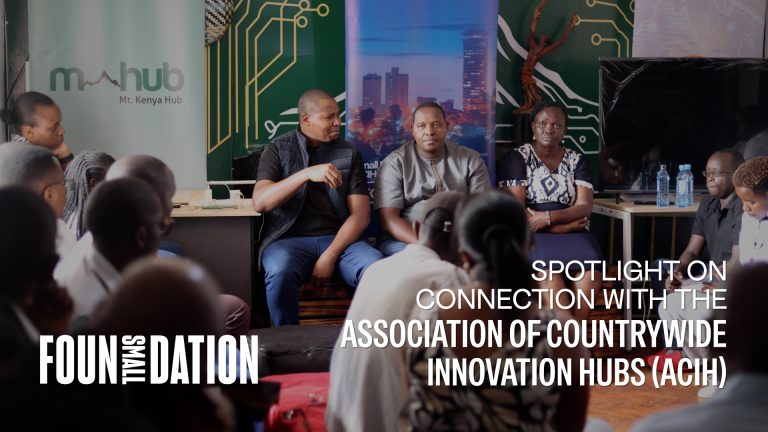
Every network begins with relationships. Kenya’s Association of Countrywide Innovation Hubs (ACIH) connects incubators, accelerators, maker and co-working spaces and design studios across rural counties that have often been overlooked by capital and networks concentrated in large cities. What began seven years ago as a handful of isolated hubs has grown into a network of over 160 members, sharing funding leads, peer learning, and a growing digital platform that puts opportunity directly in front of hubs that would otherwise never hear of it. For member hubs expanding into underserved counties, that connection has translated into concrete support – funding, mentorship, and the confidence to build.
A network is like a weaved mat, that you can access different areas through threads that have been created by different people.
– Kenneth Njihia
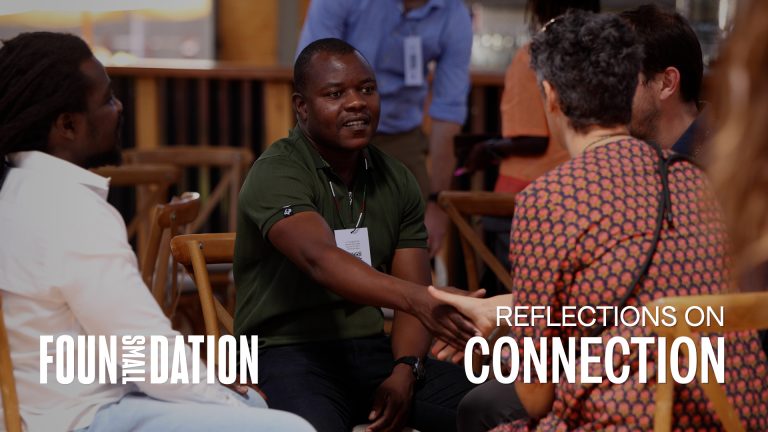
Across our network partners, members describe shared purpose and values as the foundations of any working network – these elements provide clear strategic intent and motivation to invest time in the network. Trust follows when built with patience and intention.
Our partners reflect how it can be nurtured through in-person, curated convenings, as well as ongoing activities between convenings (ABCs). What emerges are not just contacts, but working relationships – trusted enough to be useful, purposeful enough to last.
The starting point of long-term change is relationships... Over time relationships develop into collaborations, and those are the heavy lifts our members are partaking in to influence the system.
– Elizabeth Howard
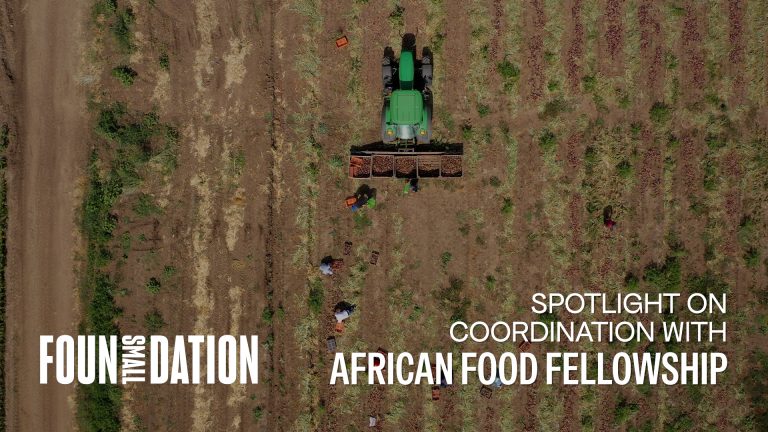
African Food Fellowship brings together food systems leaders across sectors and geographies in Kenya and Rwanda that rarely share a table – fisheries, horticulture, agri-finance, policy and research. Coordination happens deliberately across the network’s fellowship cohorts: fellows working in varied parts of food systems are connected across cohorts, so expertise and momentum can build rather than stay isolated within a single group. That cross-pollination – one fellow’s work reaching another’s, one cohort’s lessons reaching the next – is how individual insight becomes network-wide opportunity, with the potential to reach across African food systems.
Networks bring together all the knowledge, the wisdom, the experience, the perspectives from different actors to drive a better tomorrow for our food systems. Networks are critical infrastructure.
– Ledama Masidza
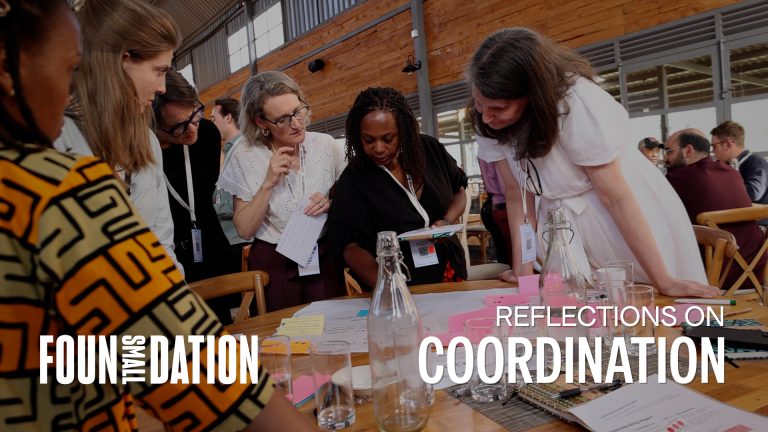
Practical and productive coordination can emerge when strong connection has been established – it happens when people or organisations exchange ideas and improve each other’s work. Small, consistent and aligned choices adding up to real efficiency. Across our network partners, we hear of the choices made to focus on coordination rather than trying to do everything themselves, passing opportunities on to whoever is best placed to use them, intentionally coordinating to leverage resources effectively.
Agribusiness Market Ecosystem Alliance (AMEA) provides a platform where governments, farmers organisations, agribusinesses, financiers, and service providers identify what’s broken in terms of business development services for -SMEs and jointly explore how to improve them. One outcome took six years of dedicated collaboration: an international standard for business development services (BDS) to drive improved quality of BDS support across the sector – since adopted independently in Ethiopia, Tanzania and Uganda.
I think it’s interesting to see how we’ve evolved… it was more top-down - the global working groups drove all of it. [But] things cannot be scaled unless you take into account the local context and you develop local roadmaps… I think that changed the power dynamic. So now it’s more local network driven.
– Mark Blackett
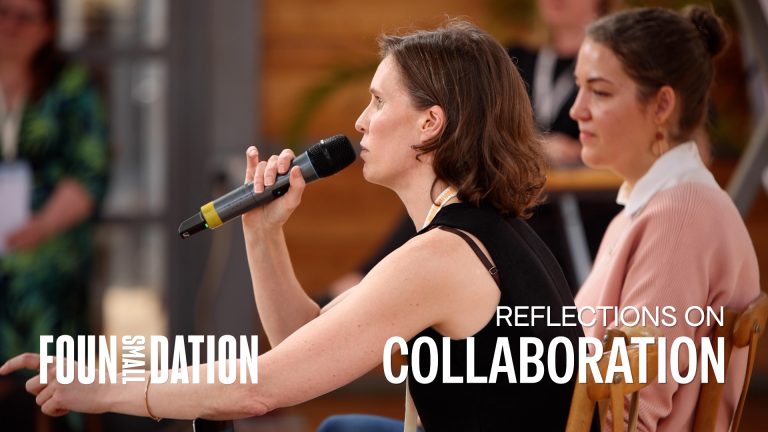
Our partners describe how networks create the conditions for emergence of new ideas and opportunities – creating space for people to move from a competitive mindset to a collaborative one. Partners share how as their networks have moved from connection, to coordination, to becoming truly collaborative, they begin to act as one rather than the sum of their parts, and what emerges has the potential to change systems.
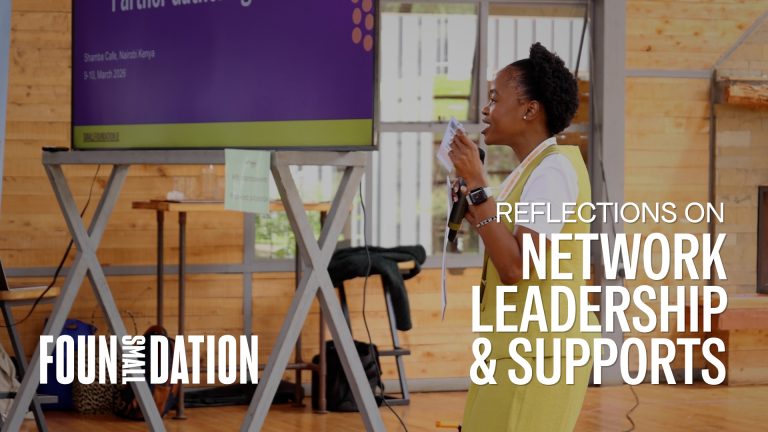
Behind every network sits an often invisible layer of support: training, funding, and the people whose job is weaving the strands of a network together. Approaches such as the Network Leadership Series and the Bopa DiPeo Fellowship build the necessary skills – facilitation, relational leadership, bringing people together around a shared goal – through hands-on practice rather than theory alone. Small Foundation is committed to seeding the infrastructure that makes these skills available, recognised and applied to the complex problems facing the rural MSME ecosystem, alongside the operating costs of the networks themselves.
If anyone is truly interested in moving the needle in the entrepreneurial ecosystem, I think it’s very important that we look into how networks work and look into the organisations that help those networks to lead and survive.
– Ajoke Omoware
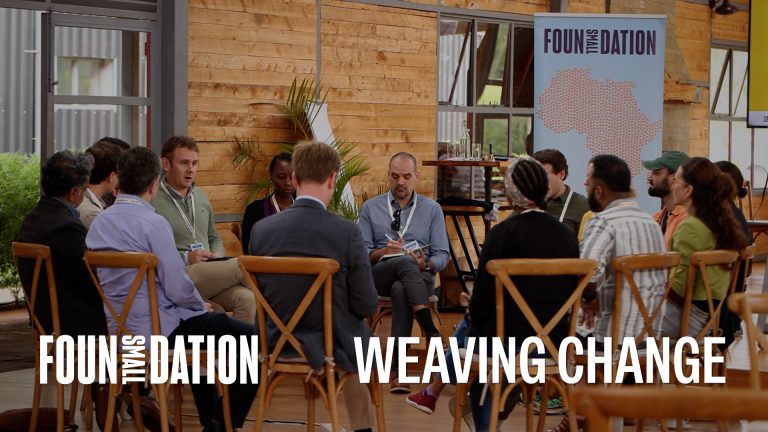
The achievements of these networks have been made possible because people found each other, learned to openly share what they know, and – with enough trust and time – co-created new collaborative spaces in service of their common purpose. A network’s story is rarely linear, but coming together and weaving connections, through to coordinating efforts, and learning to truly collaborate, is how systems can change.
Through our investment, networks, and research practices, we partner with intermediaries and ecosystem-building initiatives that support African MSMEs to thrive. Here is a snapshot of what our partners achieved in 2025, through the lens of our collaboration.

2X Global
In 2025:

A&A Collective
In 2025:
AFRACA
In 2025:

African Food Fellowship
In 2025:
Agri-SME Learning Collective
In 2025:
Agribusiness Market Ecosystem Alliance
In 2025:
This report offers only a slice of our story. Beyond the initiatives featured here, our investment, network and research partners are generating insights, building connections, and driving systemic change across the rural MSME ecosystem. We invite you to explore their work and the broader efforts shaping a thriving Africa.
We also invite you to learn more about our approach to impact measurement, management and learning. To access the audio version of this report, please click here.